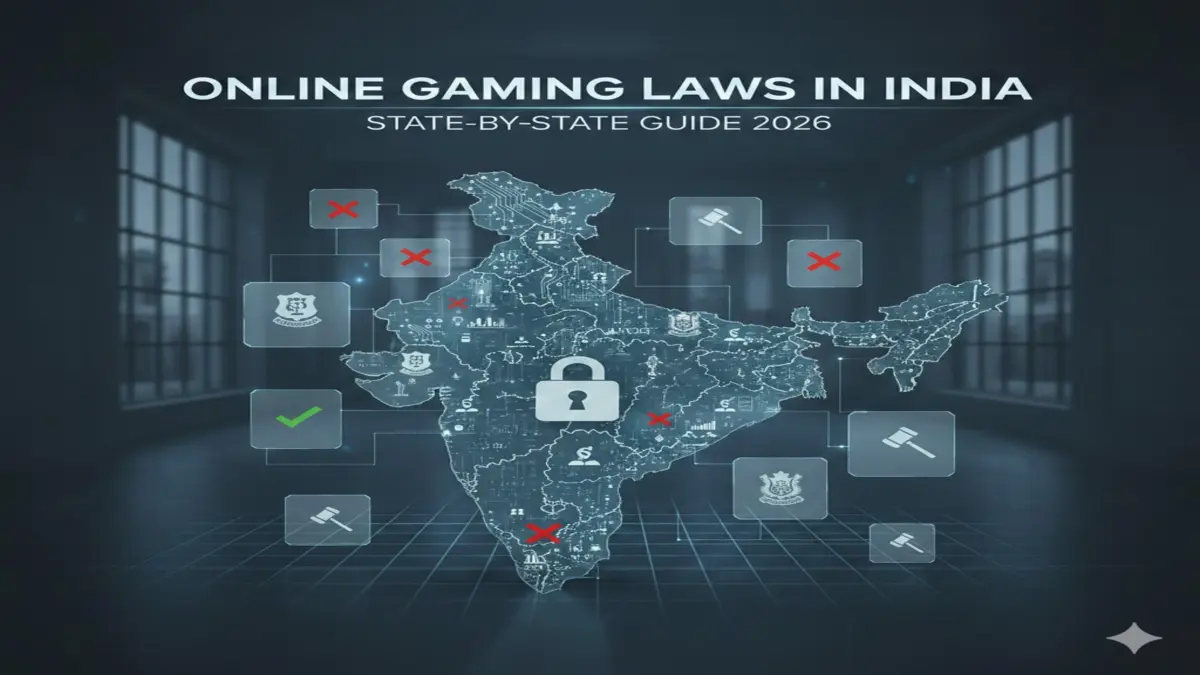
This article explains how India’s gaming laws have evolved under the Promotion and Regulation of Online Gaming Act, 2025 (PROGA), outlining which forms of gaming are legally permitted, which are banned, and how federal regulation has reshaped the online gaming landscape.
India’s Gambling Law Timeline: From 1867 to the PROGA 2025 Ban
The timeline below highlights the key events that have led to the development of the country’s complex iGaming regulatory system, culminating in the Promotion and Regulation of Online Gaming Act (PROGA) 2025.
The Public Gambling Act, 1867, prohibited “common gaming houses” in India while making exceptions for games of skill, such as rummy.
The Indian Constitution transferred the power to regulate gambling to individual states via the Seventh Schedule.
Goa legalized land-based casinos in designated five-star hotels and offshore vessels, creating India’s gaming hub.
Allowed states to regulate and conduct their own lotteries, resulting in 13 states running government-operated systems.
The IT Act, 2000, addressed cyber activities and digital crimes, indirectly impacting online gambling via cybercrime provisions.
Goa saw the launch of the Casino Royale, India’s first offshore casino, marking the state’s entry into offshore gaming.
Sikkim became the first state to regulate online gambling, including casino games and sports betting, within its borders.
Nagaland legalized skill-based online games, such as poker and rummy, under a leader-regulating framework for digital skill gaming.
The Supreme Court ruled that rummy is a game of skill, protecting it from gambling bans and reinforcing the legal distinction.
Meghalaya legalized and licensed both online and land-based gambling, setting a new standard for regulated gaming.
Tamil Nadu imposed a ban on online gambling, specifically targeting platforms hosting games like poker and rummy.
The court ruled the ban unconstitutional, emphasizing that skill-based games cannot be treated as gambling.
National discussions on a central online gambling framework began, aiming for uniformity across all states.
The Promotion and Regulation of Online Gaming Act (PROGA) introduced a federal ban on online money games while regulating e-sports.
The federal ban on online money games came into effect, with platforms like Dream11 and MPL suspending cash contests under PROGA.
The Supreme Court will determine whether the central PROGA law overrides independent state powers regarding online gaming.
Sources:
The New Federal Era: Understanding the PROGA 2025 Act
What is the Promotion and Regulation of Online Gaming Act (PROGA)?
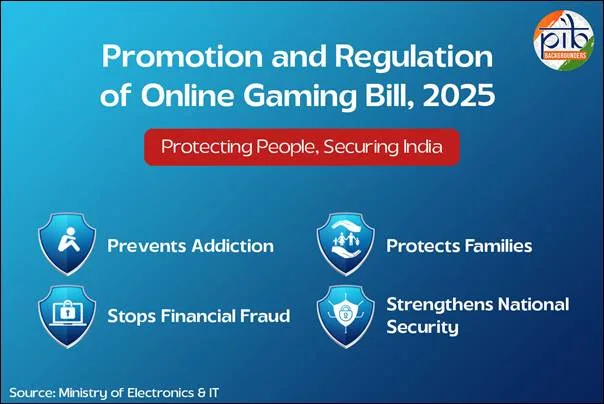
The Promotion and Regulation of Online Gaming Act (PROGA) 2025 is India’s first central law regulating online gaming. Enforced from October 1, 2025, it bans all online money games nationwide and regulates only non-monetary digital games such as e-sports and social games.
PROGA was introduced to address concerns around gaming addiction, financial fraud, underage gaming, and money laundering, caused by inconsistent state laws and conflicting court rulings.
The Act overrides state legislation, marking a shift towards federal regulation of online gaming, particularly focusing on curbing the adverse effects of real-money gaming platforms.
The Key Impact: A Move Toward Federal Regulation
One of PROGA’s key impacts is its federal approach. By giving central government authority, it replaces the previous state-by-state patchwork of gambling laws, aiming for a unified national framework to regulate online gaming in India.
This regulatory change is especially important as the online gaming sector has grown rapidly, with India becoming one of the largest markets for digital gaming globally.
Looking Ahead: The January 2026 Supreme Court Hearing
However, the Supreme Court of India has deferred the final decision on PROGA’s constitutionality to January 2026. The court will examine whether Parliament had the constitutional right to impose this blanket ban on online real-money games, or if states should retain authority over betting and gambling.
This ruling will be crucial for India’s gaming industry. If the Court upholds PROGA, it will establish central regulation for online gaming across India. If it rules otherwise, the industry could face a return to fragmented state-level regulation.
Sources:
- EXPLANATORY NOTE FOR RULES UNDER THE PROG ACT
- The Promotion and Regulation of Online Gaming Bill, 2025
- INDIA BUSINESS LAW JOURNAL
- Online Gaming Law Hearing Pushed By Supreme Court To 2026
State-by-State Directory: Current Legal Status (Dec 2025)
This directory provides the legal status of online gaming in India as of December 2025, highlighting state laws, the federal PROGA 2025 impact, and local variations. While PROGA 2025 enforces a nationwide ban on real-money gaming, some states have additional regulations or are adapting to its implications.
State-by-State Legal Status (Dec 2025)
| No. | State | Online Gaming Status (Dec 2025) | Local State Law / Specific Status |
|---|---|---|---|
| 1 | Andhra Pradesh | Strictly Banned | Under the AP Gaming Act, all online betting (skill or chance) is a criminal offense. |
| 2 | Arunachal Pradesh | Banned | Follows Public Gambling Act; strictly governed by PROGA 2025. |
| 3 | Assam | Strictly Banned | Prohibits all forms of betting for money under the Assam Game and Betting Act. |
| 4 | Bihar | Banned | No specific online law, but the federal PROGA ban applies. |
| 5 | Chhattisgarh | Banned | Passed the Gambling (Prohibition) Bill 2022 to ban online betting; now under PROGA. |
| 6 | Goa | Banned (Online) | Legal (Physical Casinos). The 1976 Act allows casinos in 5-star hotels and offshore vessels, but online cash games are blocked by PROGA. |
| 7 | Gujarat | Banned | The Gujarat Prevention of Gambling Act bans betting. The High Court maintains a strict stance on Poker/Rummy as gambling. |
| 8 | Haryana | Banned | Previously permissive toward “skill games”, but services are now suspended due to the federal ban. |
| 9 | Himachal Pradesh | Banned | Governed by the Public Gambling (HP Amendment) Act; now under PROGA. |
| 10 | Jharkhand | Banned | Follows the federal ban (PROGA). No local state license exists. |
| 11 | Karnataka | Banned (Conflict) | Legal for Horse Racing. State is attempting to keep online horse betting legal while other money games are blocked. |
| 12 | Kerala | Banned | High Court previously allowed Rummy, but PROGA 2025 overrides this, banning all cash contests. |
| 13 | Madhya Pradesh | Banned | Uses the Public Gambling Act; currently following PROGA 2025. |
| 14 | Maharashtra | Strictly Banned | The Bombay Wager Act blocks all online betting; aggressive enforcement against “mule accounts”. |
| 15 | Manipur | Banned | Manipur Public Gambling Act superseded by the federal ban. |
| 16 | Meghalaya | Banned | Repealed its gaming regulation act in 2023; follows the national PROGA ban. |
| 17 | Mizoram | Banned | Prohibits all forms of gambling; follows federal PROGA guidelines. |
| 18 | Nagaland | Banned (Online) | Legal (Licensing). State issued 20+ licenses for skill games, but these platforms have stopped cash games due to the federal ban. |
| 19 | Odisha | Strictly Banned | The Odisha Prevention of Gambling Act has a zero-tolerance policy for online betting. |
| 20 | Punjab | Banned | No specific state law for online gaming; the federal PROGA ban applies. |
| 21 | Rajasthan | Banned | Follows the national ban; the state has been vocal about banning “predatory” fantasy apps. |
| 22 | Sikkim | Banned (Online) | Legal (Physical Casinos). Permits physical casinos but online licenses attempted in 2024 are blocked by PROGA. |
| 23 | Tamil Nadu | Strictly Banned | The TN Prohibition of Online Gambling Act 2022 remains in effect alongside the federal ban. |
| 24 | Telangana | Strictly Banned | First state to ban online skill games (2017). Enforcement is extremely high. |
| 25 | Tripura | Banned | Follows the national PROGA 2025 Act. |
| 26 | Uttar Pradesh | Banned | State uses the Public Gambling Act to prosecute online betting houses; follows PROGA. |
| 27 | Uttarakhand | Banned | Follows the federal ban (PROGA). |
| 28 | West Bengal | Banned | Historically exempted Rummy/Poker, but currently follows the federal ban on all money-based games. |
Sources:
- A Comprehensive Guide to Gambling Laws and Regulations in India
- Gambling Laws and Regulations India 2026
The “Zero-Tolerance” States: Total Bans in Force
- Telangana & Andhra Pradesh
Telangana (2017) and Andhra Pradesh (2020) were among the first states to ban all online games played for money, including games of skill.
Both states amended their gaming laws to remove the skill-game exception. Any online wagering for stakes is treated as a criminal offence, a position now reinforced by PROGA 2025.
- Tamil Nadu
Tamil Nadu enforces strict controls on online gaming under its 2022 law. While the state allows regulation of certain non-monetary games, all online real-money gaming is currently banned due to PROGA 2025. State authorities continue active enforcement against illegal apps and platforms.
- Odisha & Assam
Odisha and Assam rely on older state gambling laws that broadly prohibit betting for money and do not clearly protect skill-based games. Online real-money gaming has long been illegal in both states, and PROGA 2025 strengthens this zero-tolerance stance.
Regulated Gambling Hubs: Goa, Sikkim, and Daman
- Physical Casinos
Goa and Sikkim continue to legally allow physical casinos under state law, mainly to support tourism. These permissions apply only to land-based or offshore casinos. Online real-money gaming is banned nationwide, regardless of state casino laws.
- Sikkim’s Online Gaming Efforts
Sikkim previously licensed online gaming within state boundaries. However, after PROGA 2025, all online real-money gaming – licensed or not – has been halted, leaving only physical casinos legal.
- Nagaland
Nagaland licenses online skill-based games under its 2015 law. Following PROGA 2025, licensed operators have suspended real-money play, as the federal ban currently overrides state licenses pending court review.
States in Legal Limbo: Karnataka, Kerala, and Maharashtra
- The Constitutional Challenge
These states and several gaming companies argue that PROGA 2025 oversteps federal authority, since gambling is traditionally regulated by states.
The Supreme Court is expected to hear these challenges in January 2026, focusing on whether Parliament can impose a nationwide ban and remove the skill-game distinction.
- The Horse Racing Exception (Karnataka)
Horse racing has been recognised by courts as a game of skill. Karnataka is exploring whether online horse-race betting can remain legal despite PROGA, making it a key test case for the scope of the federal ban.
Sources:
Permissible Gaming: What Can You Legally Play Today?
Legally permissible gaming today falls into three broad categories:
- E-sports
- Social and educational online games
- Government-regulated State lotteries
Under India’s current legal framework – especially after the Promotion and Regulation of Online Gaming Act, 2025 – only specific forms of gaming are permitted.
1. E-Sports and the National Sports Governance Act, 2025
The government aims to promote e-sports through training academies, tournament standards, incentive schemes, and integration into national sports policy, positioning e-sports as a career-oriented and skill-based sporting discipline.
Key legal points:
- E-sports must be recognised under the NSGA and registered with the competent authority.
- Betting, wagering, or staking is completely prohibited, whether by players or spectators.
- Platforms may charge registration or participation fees only for administrative purposes.
- Performance-based prize money is allowed.
- The Ministry of Youth Affairs and Sports is the nodal authority for promotion and governance.

2. Social Gaming and Educational Apps
Social and educational games continue to be legally safe and permissible, provided they do not involve money-based wagering or cash winnings.
- Casual and recreational games
- Educational and skill-building apps
- Freemium games
- Subscription-based platforms
- Advertisement-supported games
- No money deposits required for winning.
- Rewards cannot be converted into cash.
- Revenue via ads, subs, or access fees.
- Must comply with consumer & data protection.
- Required grievance redressal mechanisms.
3. Government-Regulated Lotteries
Although online money games are banned nationally, State-run lotteries remain legal in certain States under the Lotteries (Regulation) Act, 1998.
India follows a federal approach, allowing each State to decide whether to permit lotteries. Only State Governments may organise and conduct lotteries; private lotteries are illegal.
Key legal features:
- Lotteries may be paper-based or certified online systems.
- Participation is restricted to persons aged 18 and above.
- Draws must be conducted publicly and transparently.
- Lottery winnings are taxable under the Income Tax Act.
- States that ban lotteries may also prohibit the sale of tickets from other States.
Common FAQs – Online Gaming Laws in India
Article Recommendations: