
For cricket fans in India who follow the fast pace of the IPL or the fixed structure of ODIs, Test cricket often feels unfamiliar. One of the most common questions new viewers ask is simple: how many overs are there in a Test match?
Test cricket does not follow a fixed total over limit. Instead, it operates under a daily over requirement. Several factors—such as weather, playing conditions, and team strategy—can change how many overs are bowled. This structure matters even more in the World Test Championship (WTC), where every over can affect rankings and qualification.
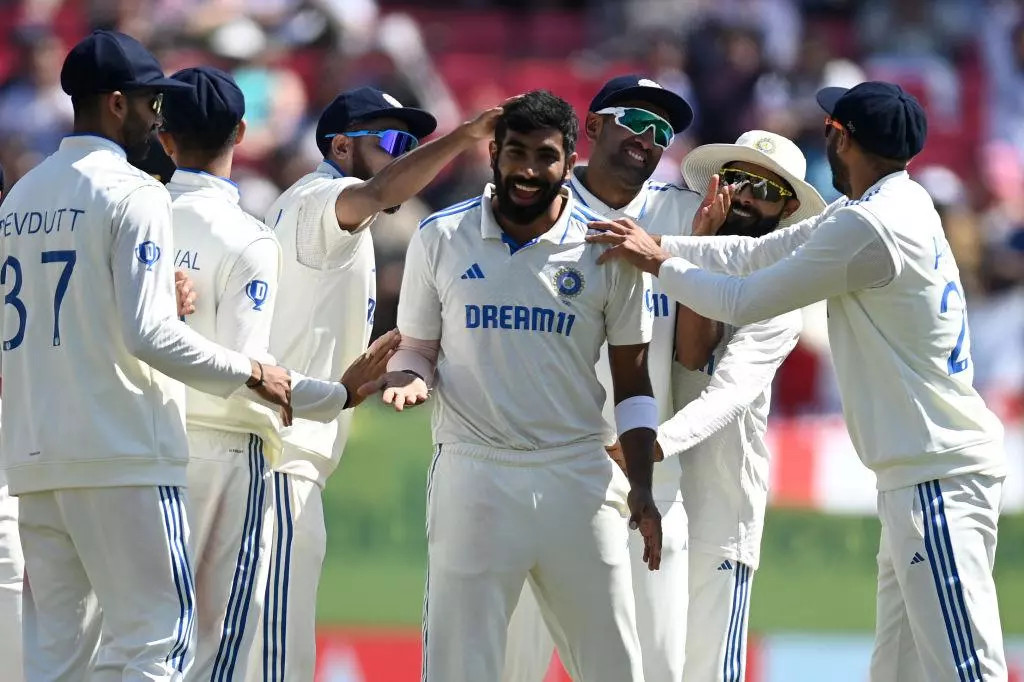
The 90-Over Rule: Daily Overs in Test Cricket
The International Cricket Council (ICC) requires teams to bowl 90 overs in a full day of Test cricket. Match officials calculate this target based on roughly six hours of play. The schedule excludes the 40-minute lunch break and the 20-minute tea interval.
To reach 90 overs, the fielding team must maintain a pace of 15 overs per hour. When teams fall short, consequences follow. Match officials fine players and captains. In WTC matches, teams can also lose championship points.
Indian fans tracking the WTC should pay close attention to this rule. Slow over-rates have already cost teams crucial points in recent seasons.
Test Match Sessions: Overs Per Session Explained
Test cricket divides each day into three sessions, with each session lasting about two hours. Together, these sessions account for the daily 90-over target.
- Morning Session: Starts around 9:30 AM local time and targets 30 overs. Fast bowlers often dominate during this phase due to fresh pitch conditions.
- Afternoon Session (Post-Lunch): Begins after lunch and aims for another 30 overs.
- Evening Session (Post-Tea): Follows the tea break and completes the final 30 overs.
If a team fails to bowl 90 overs by the scheduled close, umpires can extend play by up to 30 minutes. This rule helps teams meet their obligation and ensures a full day’s action for fans.
What Affects the Total Overs in a Test Match?
A five-day Test match allows a maximum of 450 overs. In reality, matches rarely reach that number. Several factors reduce the final over count.
- Weather and Bad Light: Rain and poor visibility often shorten play, especially in England or during the Indian monsoon.
- Innings Changeovers: Officials deduct two overs for each innings change to allow teams to switch roles.
- Early Results: Strong teams sometimes end matches in three or four days by dismissing opponents quickly.
- Strategic Declarations: Captains may declare an innings early to create time for a result.
Test Cricket vs Limited-Overs Formats (ODI & T20)
The biggest difference between Test cricket and white-ball formats lies in over limits per innings.
- ODIs allow 50 overs per team
- T20s limit teams to 20 overs
- Test cricket sets no over cap per innings
This freedom changes how teams approach the game. In limited-overs cricket, bowlers focus on controlling runs. In Test matches, bowlers hunt wickets. Teams win only by dismissing all 20 opposition batters.
This shift turns Test cricket into a contest of patience, stamina, and long-term planning.
Conclusion
Understanding how overs are structured in Test cricket offers deeper insight into the format’s unique rhythm and strategic complexity. While the theoretical ceiling of 450 overs provides a framework, real-world variables—weather, captaincy decisions, and time management—ensure that no two Tests unfold the same way.
In this format, time is as valuable as runs and wickets, and mastering its flow is key to appreciating the patience, pressure, and drama that define Test cricket.
Frequently Asked Questions (FAQs)
Read More: