
In just 3 minutes today, bro, you’ll understand the online Ludo game rules and quickly learn how to play Ludo online!
From rolling the dice to moving your tokens – plus the simplest and most practical winning tips – here’s your full free guide.
Simple Online Ludo Game Rules
With a four-color board, four tokens per player, and one dice, you can start playing Ludo. The game is for 2 to 4 players. Each player rolls the dice once per turn to decide how many steps to move. Tokens must move in a clockwise direction around the board. The main goal is simple: whoever gets all 4 tokens to the finish area (triangle zone) first – wins the game!
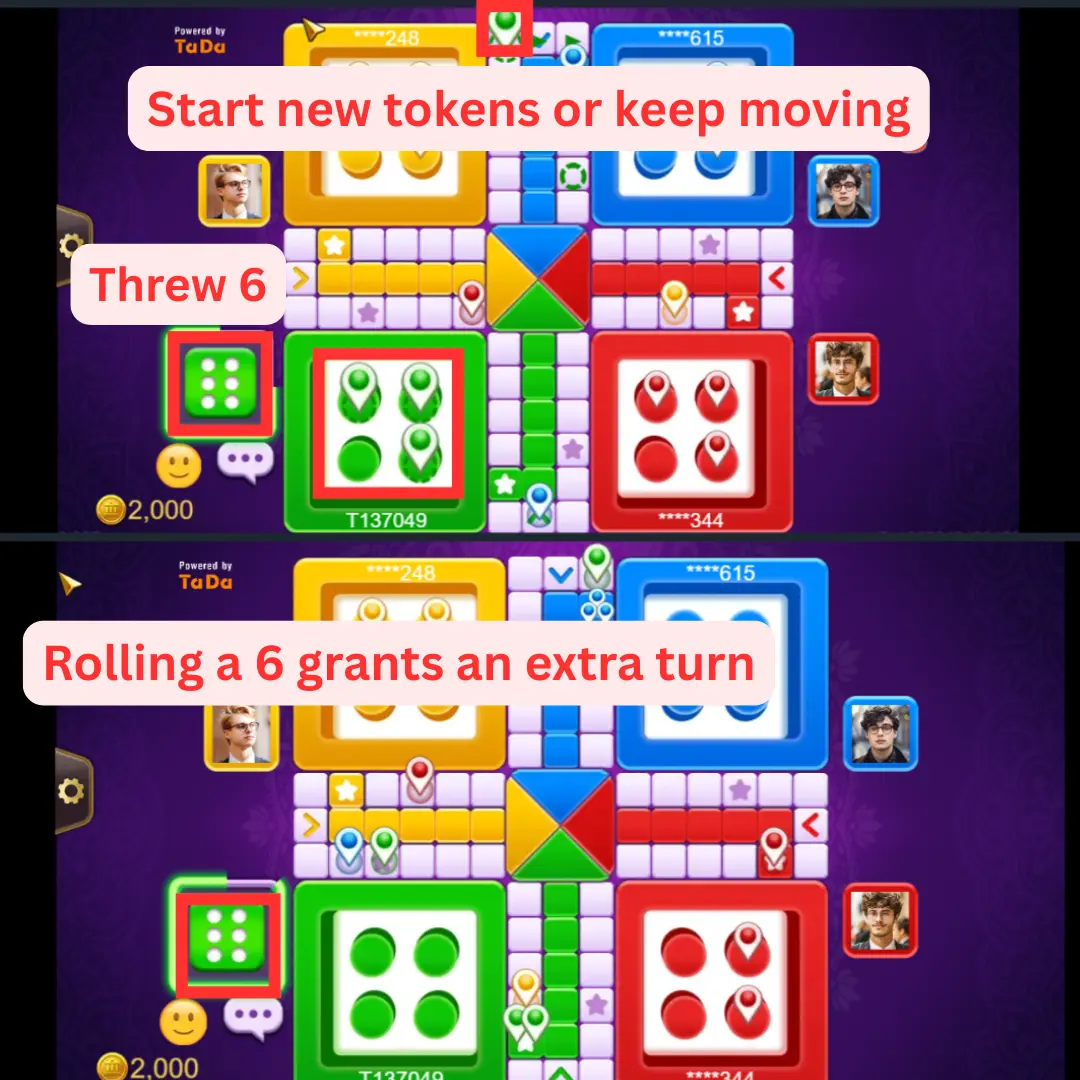
Before you can move a token out, you must roll a 6. Once you get a 6, you can bring one token out from the big square and roll again. If you already have a token outside, rolling a 6 lets you choose – either bring out a new one or move the one already on the board.

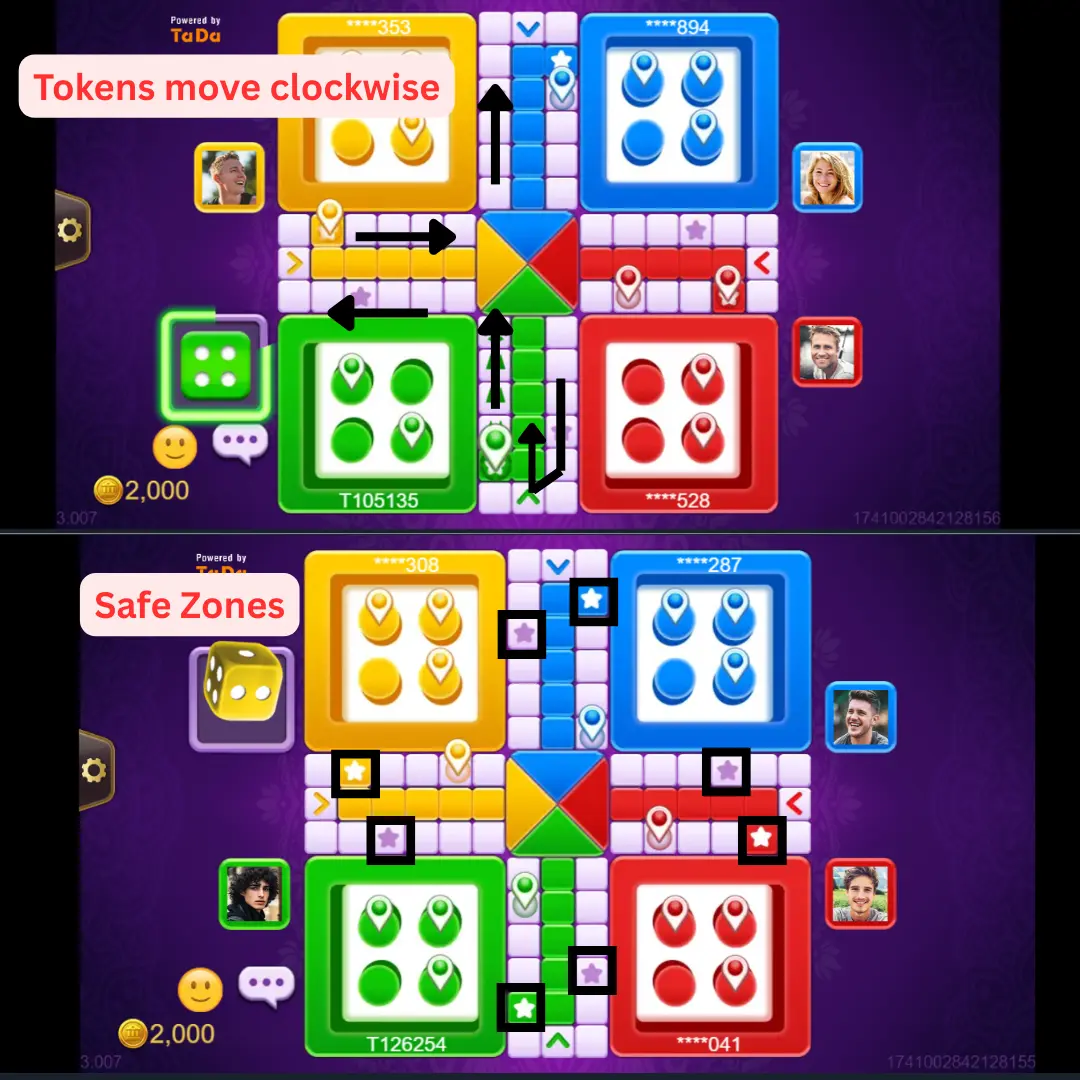
Ludo game rules step by step
Start by choosing your color and number of players. Each player takes turns rolling the dice to move their tokens forward. The first player to get all four tokens to the finish area wins the game! Let’s go through the full step-by-step guide on how to play Ludo online.
Online Ludo Game Steps:
Each player selects one color (red, blue, green, or yellow). The game supports 2 to 4 players.
The game is turn-based. Each player rolls the dice once per turn. The dice shows a number from 1 to 6, which decides how many steps the token can move.
To move a token from the base to the starting point on the board, you must roll a 6. After rolling a 6, you get another chance to roll and move forward. If you don’t roll a 6, you can’t move out, and it becomes the next player’s turn.
Players can choose to move a token already on the board, or bring out a new token if they roll a 6.
If you land on a space where an opponent’s token is standing, their token gets sent back to the base (except when they’re in a safe zone).
Once a token completes one full round, you must roll the exact number to enter the home triangle. The first player to get all four tokens to the home area wins the game!


Online Ludo Demo (Real-Money Version)
Zupee and MPL no longer offer real-money Ludo games online. If you’re looking to play Ludo for cash, you can try JILI, which gives a ₹2000 demo bonus, or visit Vegas11 online casino to claim a no deposit Ludo bonus between ₹10 to ₹2495.


Practical Online Ludo Winning Tips
1. Get All Your Tokens Out Early
When you roll a 6, don’t just release one token – release as many as possible. Having more pieces on the board gives you more movement options and increases your survival chances.
2. Keep Your Tokens Spread Out
Avoid grouping your tokens together. Spread them across the board to reduce the risk of multiple tokens being captured at once.
3. Land on Safe Squares Whenever Possible
If you see a star-marked safe spot, stop there! Safe squares protect you from being captured and help you plan your next attack.
4. Don’t Stack Two Tokens on the Same Spot
If your opponent lands on that space, you’ll lose both tokens in one go – that’s a huge loss.
5. Use Captures to Get Extra Turns
Every time you capture an opponent’s token, you get another dice roll. Use this rule to build momentum and turn the game around.
6. Be Flexible With Your Dice Numbers
Think smart before you move – choose the piece that offers the safest and most strategic advantage based on your current position.
7. Watch Your Opponents Closely
Always keep an eye on who’s near your token. If someone’s getting close, adjust your move to defend or counterattack.
8. Practice in Demo Mode First
Most online Ludo platforms offer free demo modes. Use them to get comfortable with the board and movement strategy before you start playing real-money games.
Differences Between Ludo and Pachisi
- Board Design: Pachisi is played on a cloth cross-shaped board, while Ludo uses a square board.
- Players: Pachisi is typically played in pairs (2v2), whereas Ludo supports 2-4 individual players.
- Dice Used: Pachisi uses cowrie shells, while Ludo uses a six-sided die.
- Complexity: Pachisi has intricate strategies, while Ludo offers a simplified, faster-paced experience.